
Next live online weekend · November 6–8, 2026
Become an official IFBB Coach
IFBB International Competition Coach Course
Build a complete contest-preparation system: athlete assessment, nutrition, training, IFBB judging criteria, peak week and post-competition recovery.
Start Module 0 immediately · 20 hours live online · Recordings included
Earn the official IFBB International Competition Coach Diploma after successfully completing the course requirements.
€499 paid in full
Explore the course →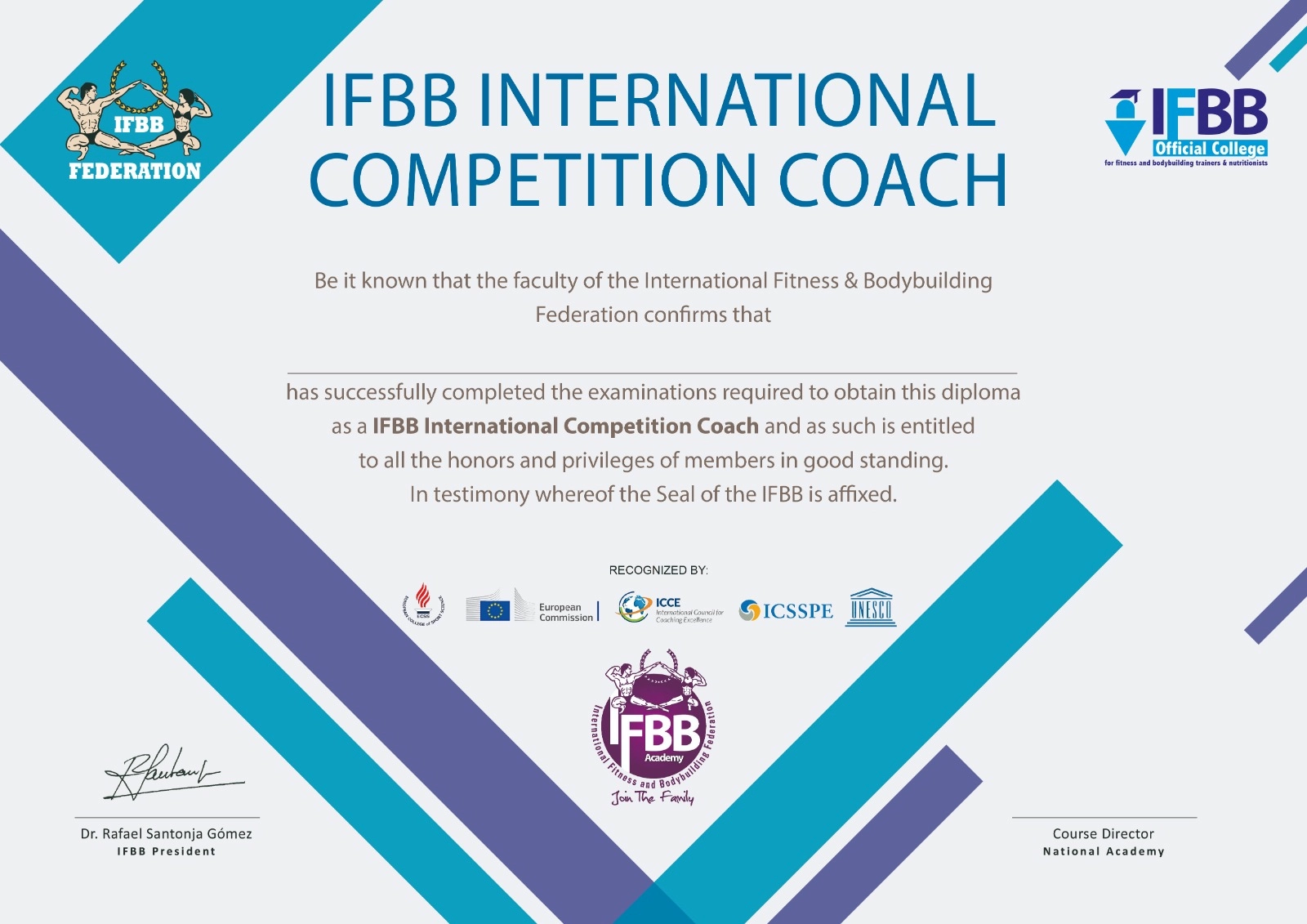
Your client’s progress has stalled. What should you change next?
Learn to assess training, nutrition and recovery and explain your next coaching decision. Build your foundation with Personal Trainer training or develop the specialist skill your current clients need.
Your next level is the ability to make better coaching decisions.
Coaches don't fail from lack of information. They struggle when rigid dogma offers no physiological answers for complex, real-world client dilemmas.
- Identify the cause: Distinguish metabolic adaptation, fatigue, and biomechanical bottlenecks.
- Make precise adjustments: Apply the simplest justified change without guesswork.
- Earn lasting trust: Lead clients with official IFBB authority and health-first integrity.
Where should you begin?
Choose your pathway based on whether you are building your foundation or advancing an established coaching business.
I do not have a PT certification yet
You want to transition from personal training enthusiasm to professional client coaching, master the complete 5-stage workflow, and earn an internationally recognized diploma.
I am already a certified PT or coach
You have the basics down, but need advanced problem-solving capabilities in nutrition plateaus, biomechanical optimization, posing pedagogy, or competition prep.
From Clarity to Foundation, Specialization, and Master Coach
You don't jump randomly between courses. You advance through a progressive curriculum tailored to your capability gaps.
Fundamentals
Experience our teaching philosophy and master core hypertrophy and nutrition science at zero cost.
- Coaching Fundamentals
- Certificate of Completion
Personal Trainer
Build an end-to-end client system from assessment to programming and progression management.
- IFBB Personal Trainer
- 5-stage client process
Advanced Courses
Solve specific bottlenecks in advanced nutrition, biomechanics, posing, and contest prep.
- Nutrition & ART
- Posing & Competition Coach
Master Coach
Highest level integration: physiology, psychology, and complex elite athletic cases.
- IFBB Master Coach
- By application only
Not just a private course company. Part of an official global sports federation.
IFBB Nordic Academy is directly connected to the International Fitness & Bodybuilding Federation. Founded in 1946, the IFBB represents clean sport, academic coach education, and an international competition ecosystem.





Solve the Real Bottlenecks in Your Coaching
Choose your course based on the exact capability gap you need to solve.
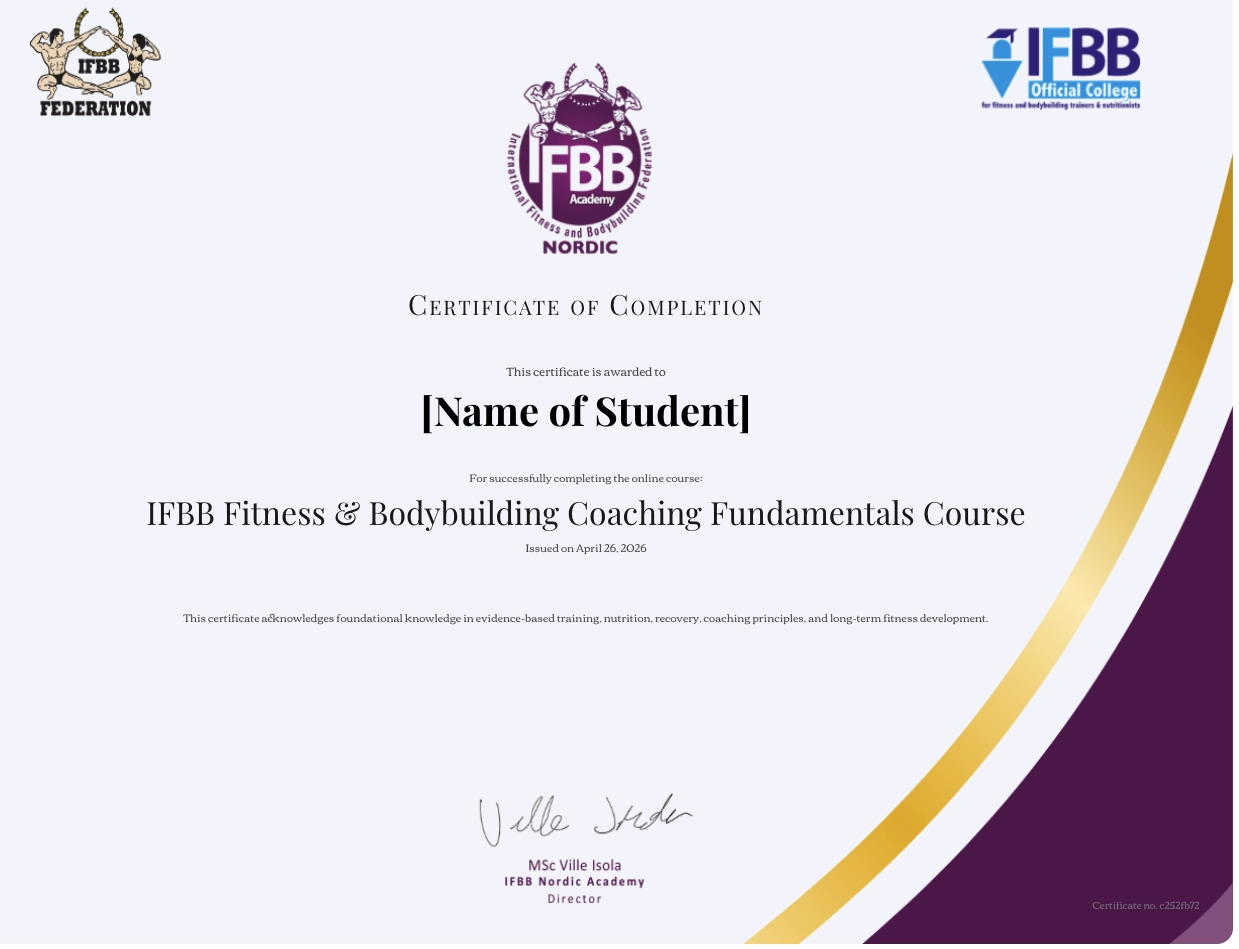
IFBB Coaching Fundamentals
For: Coaches looking to experience our teaching methodology and build a solid foundation in exercise science at zero cost.
- Core principles of evidence-based physique coaching
- Final assessment & Certificate of Completion
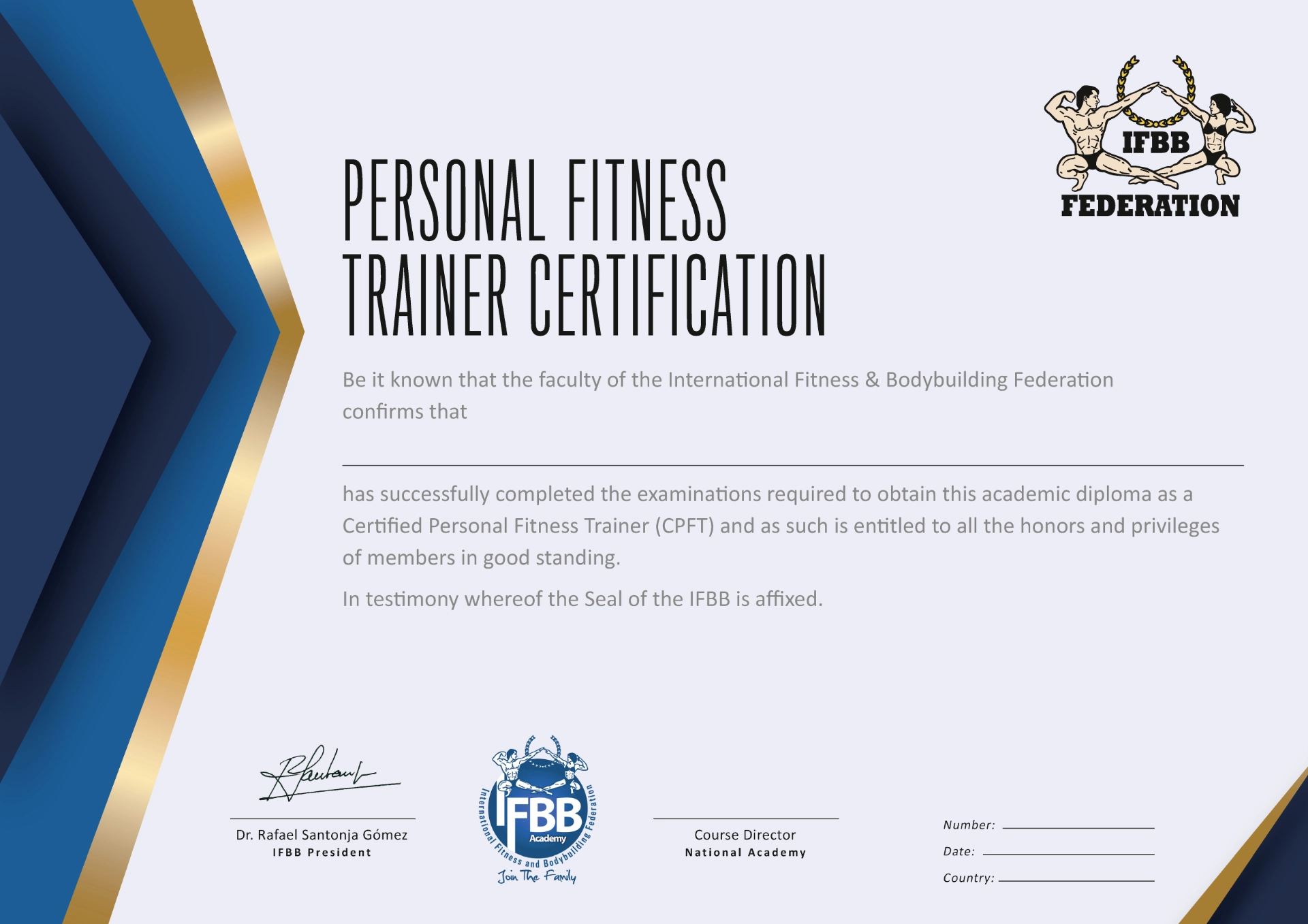
IFBB Personal Trainer
Bottleneck: You have workout knowledge, but lack a structured, professional 5-stage client assessment and delivery framework.
- Master assessment, periodization, and individual adjustments
- Official international IFBB Personal Trainer credential
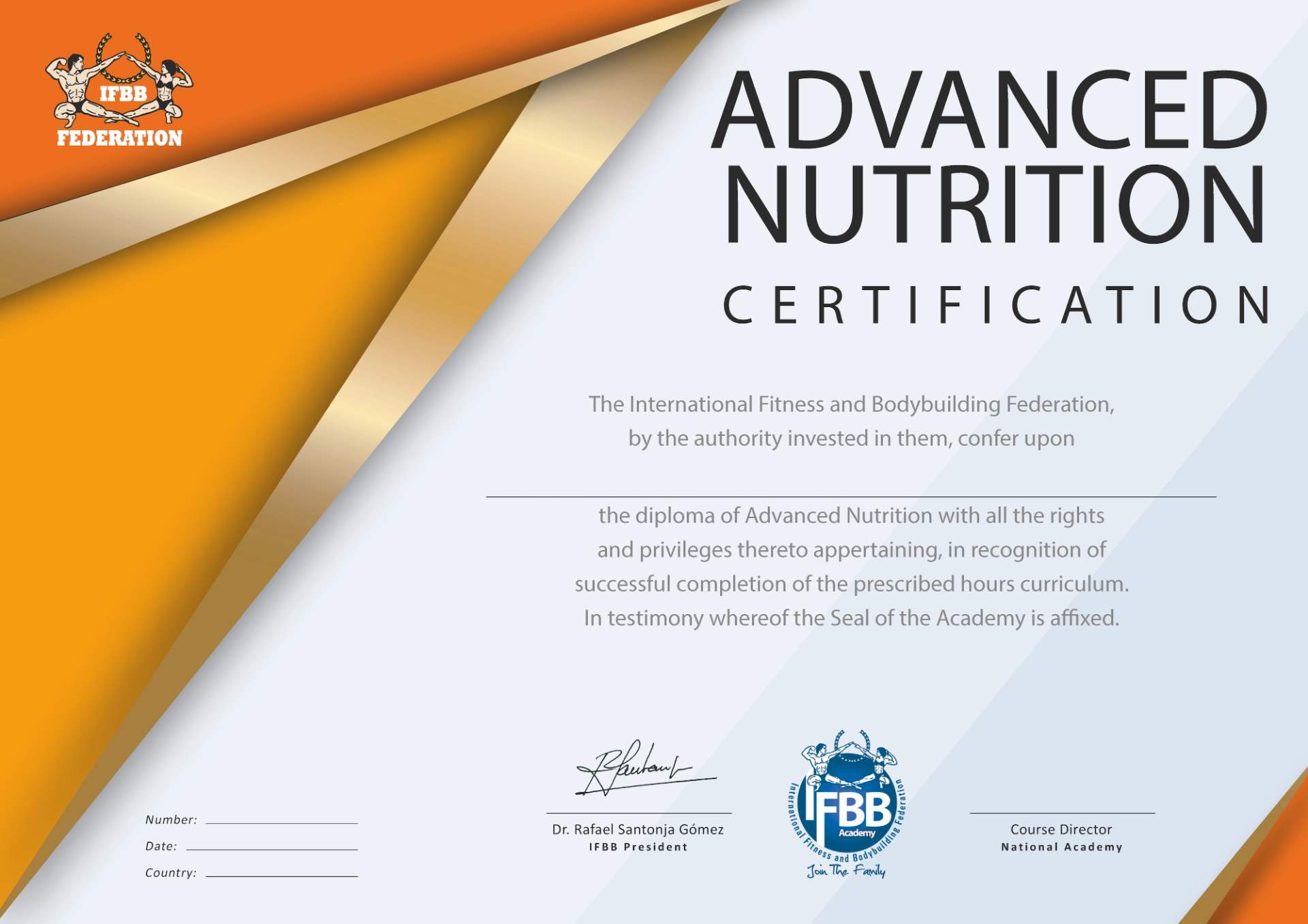
IFBB Advanced Nutrition
Bottleneck: You know basic macros, but struggle to diagnose fat loss plateaus, hormonal slowdowns, or diet-break protocols.
- Metabolic adaptation, energy balance, and plateau diagnosis
- Refeed strategies and post-diet Recovery Diet protocols
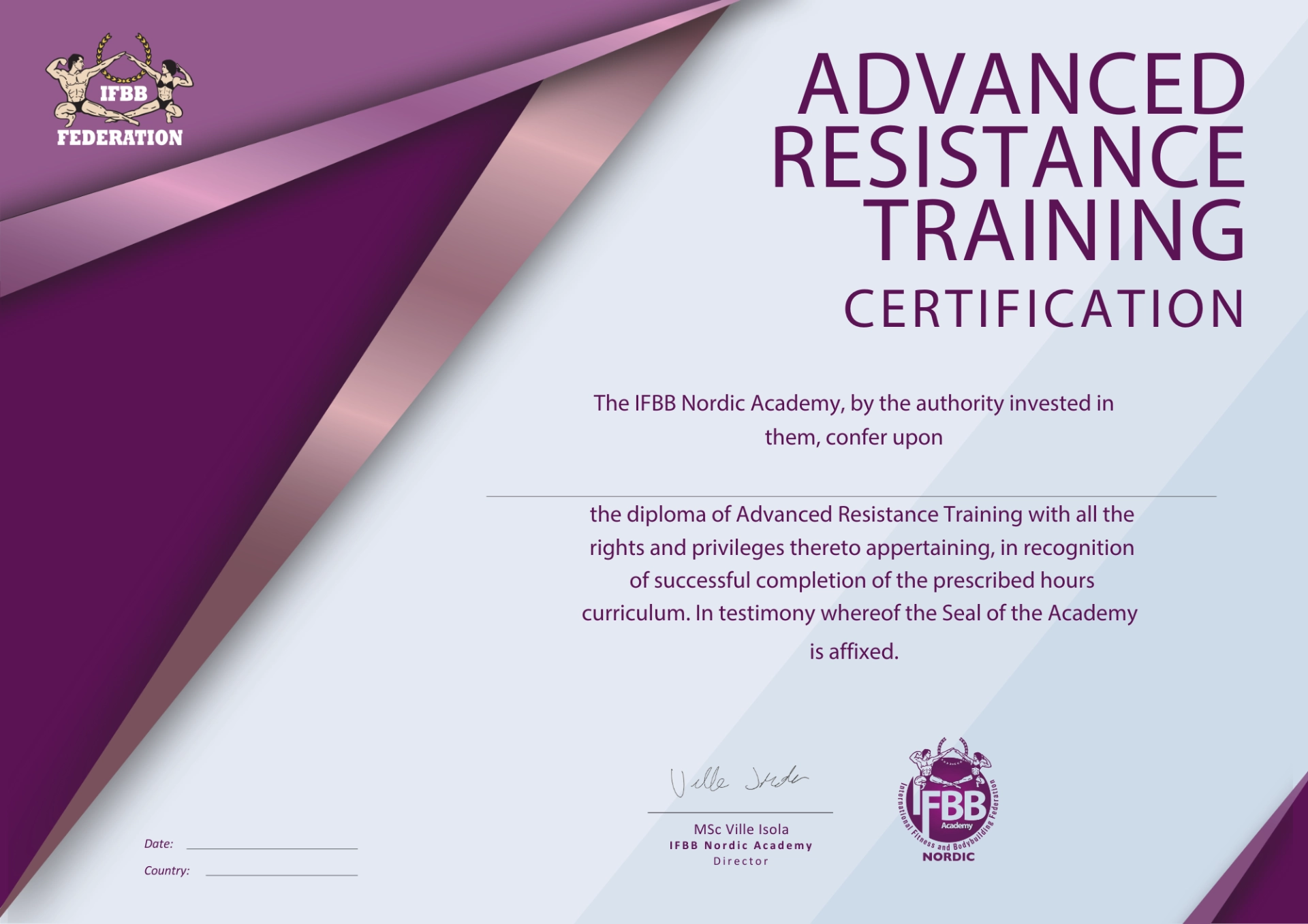
Advanced Resistance Training
Bottleneck: Client hypertrophy stalls, and you can't determine whether it's volume, moment arms, exercise selection, or recovery limits.
- Biomechanics, resistance profiles, and functional anatomy
- Hypertrophy periodization and RIR/RPE intensity management
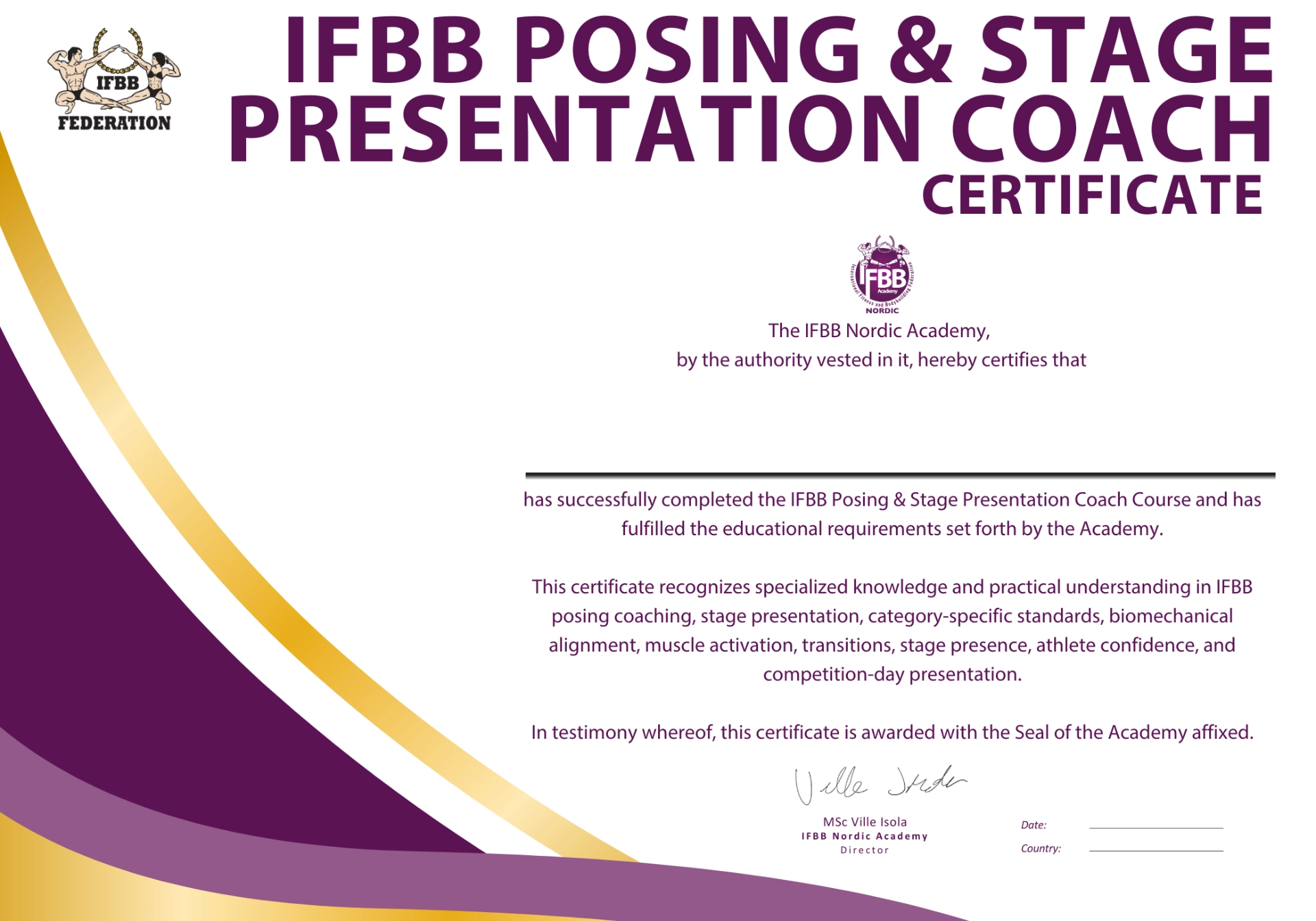
Posing & Stage Presentation
Bottleneck: Competitors fail to present their physique effectively due to poor motor learning, flawed transitions, or stage insecurity.
- Motor skill acquisition and physique-maximizing alignment
- Official IFBB division judging rules and stage transitions
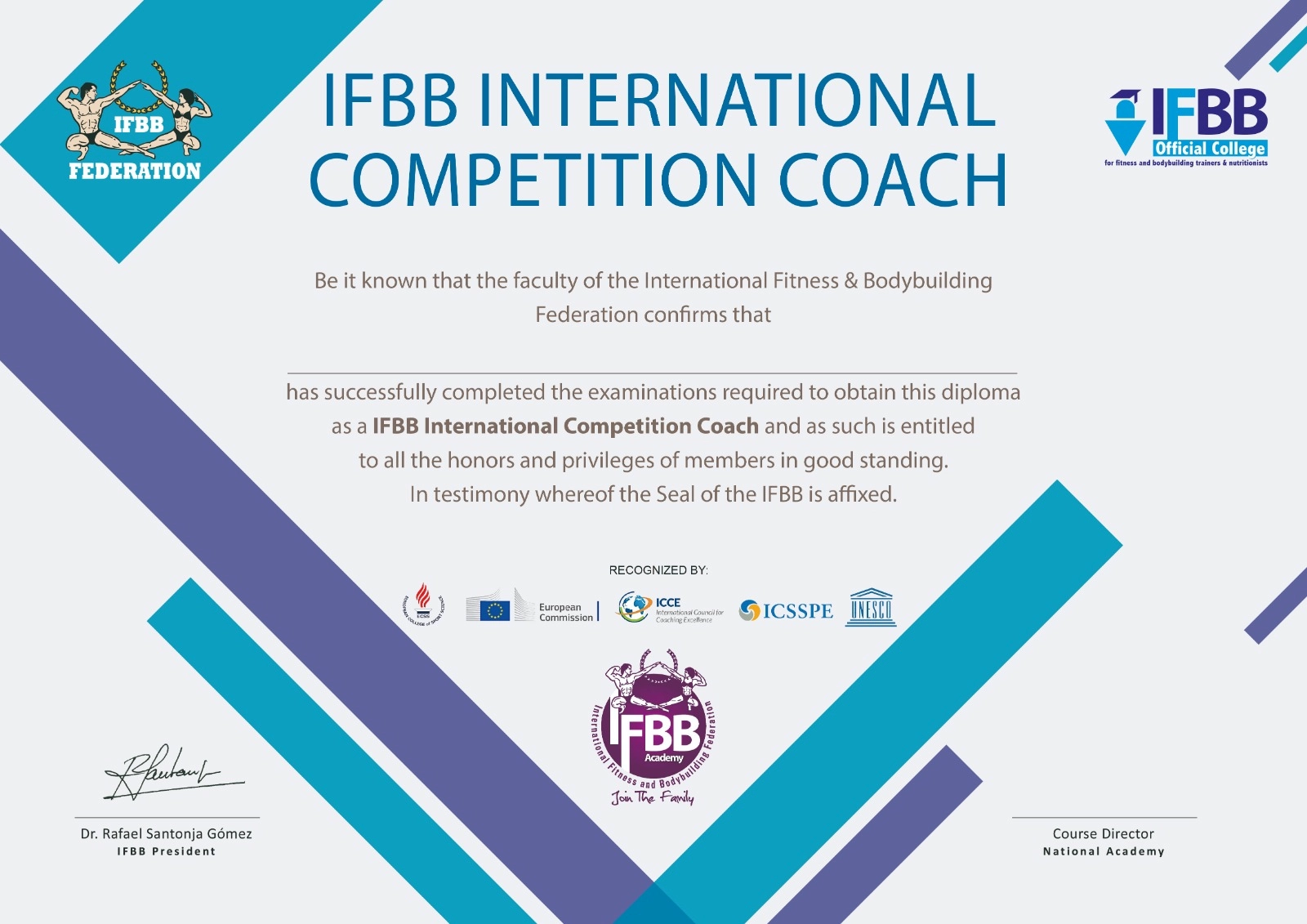
International Competition Coach
Bottleneck: Contest prep relies on chaotic peak-week gimmicks instead of an end-to-end physiological peaking timeline.
- Prep timeline design, rate of loss, and check-in analysis
- Safe, evidence-based peak week protocols & post-show recovery
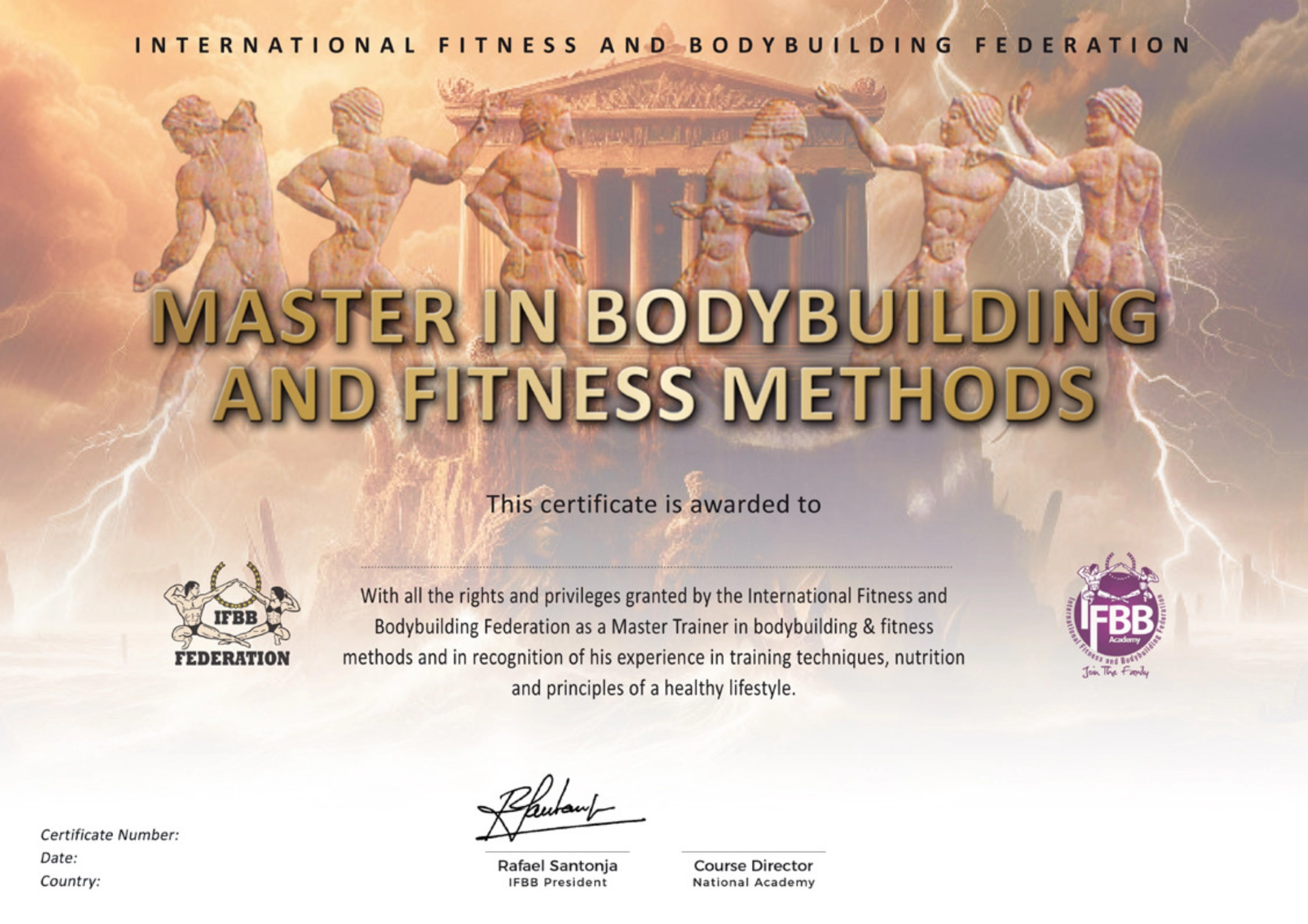
IFBB Master Coach Program (Application Only)
For experienced coaches: Integrate exercise physiology, nutrition science, biomechanics, and coaching psychology into supreme authority.
- Develop 'The Coach's Eye' to identify true signals from client data noise
- Establish elite authority and high-ticket client positioning
You are not buying information. You are buying professional certainty.
Real coaching development happens when education removes uncertainty and equips you with validated, real-world systems.
From Scattered to Systematic
Transition from social media tips to a coherent framework where every decision has scientific and practical justification.
From Guesswork to Certainty
Stop second-guessing your plans. Know exactly why a strategy works for one client and needs adjusting for another.
From Information Collector to Leader
Develop the confidence to explain, guide, and lead clients and competitive athletes with high-status professional authority.
Frequently Asked Questions
What makes IFBB Nordic Academy different? ⌄
IFBB Nordic Academy teaches structured decision-making (Flexible Precision) led by PhD exercise scientists and is directly accredited by the official IFBB international sports federation representing 203 nations.
Are the courses fully online? ⌄
Yes. You can complete your studies completely online and at your own pace alongside full-time work and training.
Where should I start if I am already coaching? ⌄
If you already have personal training experience, your strongest next step is Advanced Nutrition (nutrition problem-solving), Advanced Resistance Training (biomechanics & hypertrophy), Competition Coach, or our flagship Master Coach Program.
Don't just collect information. Become the coach clients trust.
Take the next step toward decisive coaching competence and official IFBB-recognized authority.